
読んでいる言語で再生されます。任意の段落をタップすると、そこから再生が始まります。
UENI Eコマース プランは、次の機能を備えた完全なオンライン ストアを約束します。 手数料0% — のために $99/月。それは本当であるにはうますぎるのでしょうか、それとも本当に賢明な取引でしょうか? 🤔
今日は計画をきちんと見直します。その中に何が入っているのか、 本当の コスト、アプリを多用する代替製品との比較、実際に利益が得られる販売量などです。誇大広告はありません。 👇
⚠️ 開示および正確性に関する注記: 一部のリンクはアフィリエイトリンクです。 追加料金は一切かかりません価格 変化 — 確認します 公式UENI価格ページ.
🧾 あなただけのサービスを提供するストア — 手数料 0%

📌 主なポイント
- 🧾 $99/月 (年間約 $82.50) + セットアップ料金79ドル — 7 日間で完全なストアが構築されます。
- 💰 0%の手数料は実質です — UENI は販売時に追加料金を一切徴収しません (どこでも標準のカード手数料が引き続き適用されます)。
- 🎁 カートの回復、サブスクリプション、事前予約、消費税の自動化、ロイヤルティがバンドルされています。
- 🧮 報われる 毎月の売上が数百ドルを超えると、それより小さいものから始めます。
含まれるもの📦
E コマース プランでは、Plus から店舗レイヤーまでのすべてが提供されます。
- 🛍️ 無制限の商品 + 安全なチェックアウト
- 💰 販売手数料0%
- 🛒 放棄されたカートの回復 (失われたお金を自動的に回復します)
- 🔁 製品のサブスクリプション (経常収益)
- 📅 事前予約(販売サービスもあり)
- 🧾 自動消費税
- ⭐ ロイヤリティプログラム
- 📲 ソーシャル販売
私の UENI Eコマースの概要 そして 価格ガイド より広い文脈を与えます。
手数料0%って本当ですか? 💰
はい、正直な脚注が 1 つあります。 UENI自体は0%かかります あなたの売上の。しかし、 支払い処理業者 (Stripe, PayPal, etc.) charge their standard card fees — every platform on Earth has those.
So "0% commission" means no プラットフォーム 処理の上にスキムを施します。それが勝利であり、それは本物だ。大規模な節約効果は次のとおりです 👇
💡 マージンを確保 – プラットフォームのスキムはありません
実際のコスト 💵
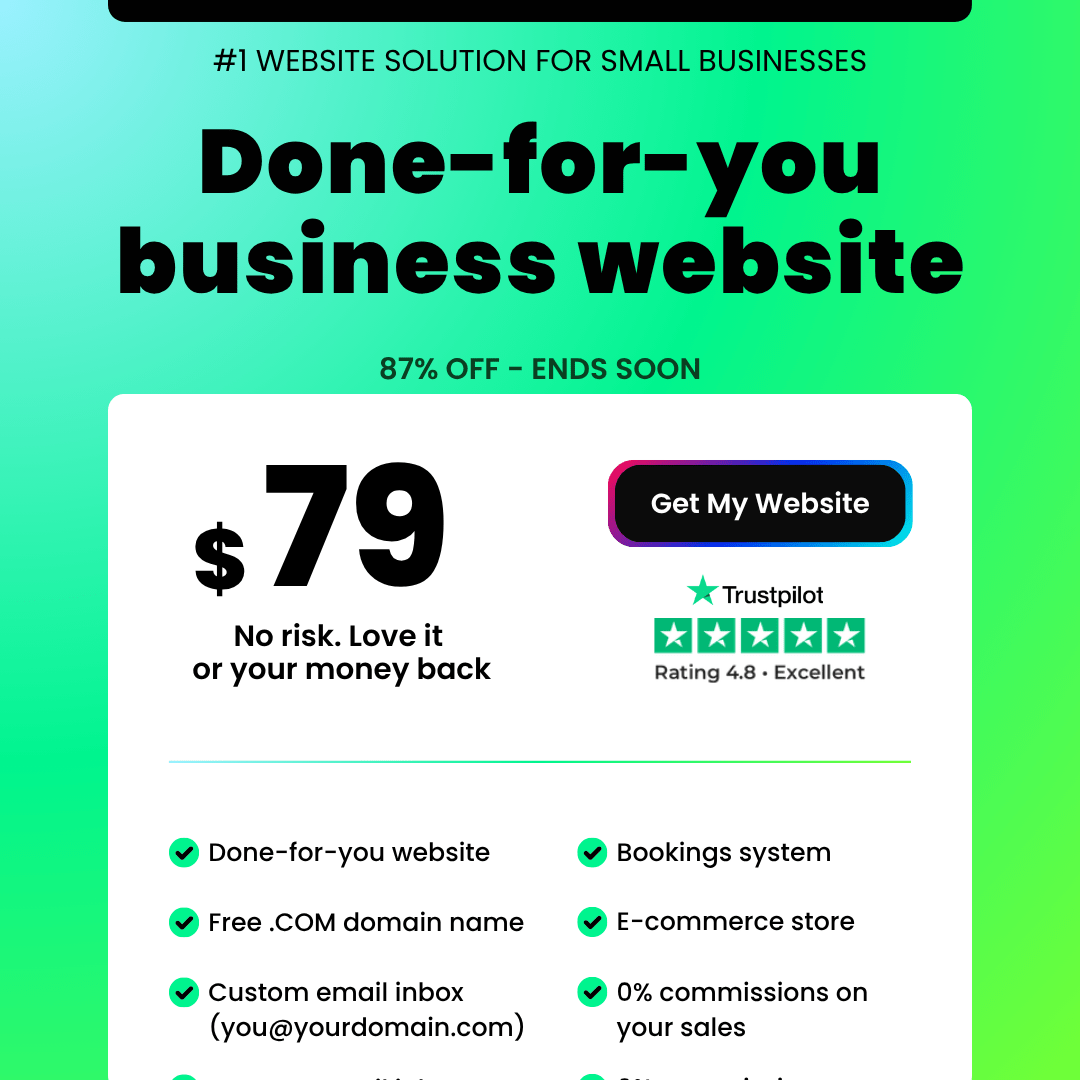
- 🏷️ セットアップ: 79ドル (プロモーション価格、通常価格599ドル)
- 🛒 計画: $99/月 (年間約 $82.50/月)
- 💳 プラス標準カード処理手数料 (どこでも同様)
販売量がそれほど多くないストアの場合、有料アプリを追加すると、手数料 0% とバンドル アプリ (カートの回復、サブスクリプション、ロイヤリティ) により、DIY プラットフォームよりも安くなることがよくあります。私の UENI と Shopify の比較 その計算を実行します。
販売量の計算 🧮
正直な損益分岐点の考え方は次のとおりです。
- 📉 売上が月あたり約 300 ドル未満: 99ドルの計画は時期尚早かもしれない — まずは次から始めよう プラス ($59/月) + 予約、需要が証明されたらアップグレードします。
- 📈 $1,000–$5,000+/月: 0% の手数料とバンドルされたアプリは本当に輝かしいものです。他の人が失うマージンを維持できます。
計算してください あなたの コミットする前のボリューム。私の LaunchとPlusの比較ガイド まだ完全なストアの準備ができていない場合に役立ちます。
誰に適していますか🎯
以下に最適: オンライン販売を追加する地元企業、小規模なカタログを持つメーカー、少数の製品やギフトカードを販売するサービス企業。売りたいオーナー様 eコマース運営者にならずに。 🙌
次の場合はスキップしてください。 あなたは、大規模なブランドのスケーリングを熱心に行っている企業(Shopify アプリの深さにより複雑さが増しています)、または週に 20 製品をテストする純粋なドロップシッパーです。私の 代替案ガイド 比較に役立ちます。
店舗レベルでの「Done for you」とは何を意味しますか 🛠️
It is worth spelling out precisely which parts of running an online store the plan takes off your plate and which remain yours, because sellers who go in with that map avoid both disappointment and pleasant surprise. The service's side of the line covers everything structural: the store's design and construction, the product page layouts, the checkout and payment wiring, the security certificate, the hosting, the tax automation, the cart-recovery and loyalty machinery, and the ongoing technical maintenance of all of it — the entire category of work that normally forces a small seller to become a reluctant platform administrator simply disappears. Your side of the line is the commerce itself: supplying good product photos and honest descriptions, setting your prices, deciding your shipping approach, packing and dispatching orders, answering customer questions, and doing the launch push that tells the world your store exists.
Notice the pattern — the service absorbs the work that is the same for every store, while you keep the work that is unique to your business, which is exactly the division a small seller should want, because your product knowledge is irreplaceable while your plugin-configuration labor never was. The sellers who thrive on the plan are the ones who embrace that split: they pour their saved hours into better photography, faster dispatch, and warmer customer service — the things that actually differentiate a small shop — and let the platform be somebody else's job permanently. Read the plan through that lens and its price becomes the salary of a part-time technical employee who never takes a day off, which for ninety-nine dollars a month is a hire few businesses would refuse.
ストアが継承する信頼層 🛡️
A subtle advantage of building your store on an established done-for-you platform, rather than assembling one alone, is the trust infrastructure your shop inherits on day one, and for a small unknown seller this matters more than it first appears. Online buyers hesitate before giving card details to an unfamiliar shop, and their hesitation is rational — the web is full of abandoned and half-finished stores — so anything that signals legitimacy directly lifts conversion. A UENI-built store arrives with the signals in place: a properly secured connection with the padlock buyers look for, a professional coherent design rather than the telltale roughness of a first DIY attempt, working policies and contact details, and checkout through recognized payment processors people already trust with their cards. None of these is exotic individually, but their reliable combination is precisely what a hasty self-built store tends to fumble, and each fumble costs sales silently as wary visitors back away.
There is also the durability signal: a store that visibly works well suggests a business that will still exist when the buyer needs support or a return, which for considered purchases is often the deciding reassurance. You still build your own reputation over time — reviews, repeat customers, word of mouth — but starting from a foundation that looks and behaves like a real shop, rather than earning basic credibility one nervous customer at a time, compresses months of trust-building into the first impression. For a small seller whose biggest invisible enemy is buyer hesitation, that inherited trust layer quietly pays for itself sale after sale.
正直なキャッチ⚠️
- 💵 月額 99 ドルはリアルマネーです — まず売上計算を検証します。
- 💳 カード手数料は引き続き適用されます (どこでもそうであるように)。
- 📸 商品写真でお店の外観が決まります — 上手に撃ってください。
- 📦こんな人に最適 中小規模のカタログ、数万の SKU ではありません。
私の 苦情とデメリットガイド 限界については正直です。
登録する前にこれを行ってください📸
- 📷 清潔で明るい場所で撮影してください 製品写真 (複数の角度)。
- 🔢 あなたの数を数えてください 製品 そして企画カテゴリー。
- 💳自分のことを決めてください 支払い処理業者 (ストライプ/ペイパル)。
- 🧪 計画する テストチェックアウト 立ち上げ時に自分自身。
素晴らしいインプット = 素晴らしいストア。私の 入門ガイド プロセスを説明する。
計画をマージンの保険として読んでください 💰
The most clarifying way to evaluate the Ecommerce plan's price is to see the zero-commission promise not as a feature but as an insurance policy on your future margin, because that framing captures where its value actually concentrates. Every percentage-based platform fee is a tax on success: trivial when you sell little, increasingly painful as you grow, and painful precisely in proportion to how well you are doing. A seller doing five hundred dollars a month barely notices a two or three percent skim, but the same seller at five or ten thousand a month is surrendering twelve hundred to thirty-six hundred dollars a year to the platform — money that would otherwise be margin — and by then migrating away is disruptive enough that most simply keep paying.
Choosing a zero-commission home before the growth happens is therefore a bet on your own success that costs nothing extra if the growth never comes and pays handsomely if it does, which is the structure of good insurance. The fixed monthly price gives the plan its second virtue: total predictability, the same bill in a slow month and a record month, which makes planning easier and means every incremental sale past breakeven is entirely yours. Sellers who think only about this month's volume often undervalue this; sellers who think about where they intend to be in two years tend to grasp immediately why anchoring on a commission-free foundation is the strategically sound move, and why the plan's price is better read as a cap on platform costs than as a cost itself.
バンドルとアプリスタックのトレッドミル 🎁
A second lens that clarifies the plan's value is comparing the bundled tool set against the app-stack model that DIY commerce platforms normalize, because the differences run deeper than a simple price tally. On a build-it-yourself platform, the capabilities UENI includes — abandoned-cart recovery, product subscriptions, loyalty, automated sales tax, advanced bookings — are each separate apps to research, install, configure, and pay for monthly, and the burden is not merely the twenty to eighty dollars a month a typical stack accumulates but the ongoing operational weight: apps that conflict after updates, support tickets bounced between vendors, configuration drift, and the low-grade vigilance of being your own systems integrator. The bundle model replaces all of that with tools that arrive pre-integrated, maintained by the same team that built the store, covered by one support channel, and included in one predictable price.
For a small seller whose expertise is their product rather than ecommerce operations, this difference in operational burden is frequently worth more than the difference in cash, because every hour not spent troubleshooting an app conflict is an hour spent making, marketing, or shipping. There is a genuine trade: the app-store model offers thousands of niche options the bundle cannot match, and a seller with unusual requirements may need that flexibility. But the honest question for most small sellers is not "could I assemble something more powerful?" — it is "will I actually benefit from that power, or just inherit its maintenance?" — and for the typical small catalog, the bundle answers it decisively.
販売者の計画開始から最初の 90 日間 📅
To ground all this in something concrete, walk through what the first three months typically look like for a small seller who commits to the Ecommerce plan, because the arc illustrates both the workload and the payback. In week one, the seller does their part: photographs each product cleanly in natural light, writes plain descriptions and prices, and submits the questionnaire; the team builds the store around that material, and the launch call ends with a live shop, checkout tested, taxes automated. Weeks two through four are the push: the seller connects the store to their social accounts, tells their existing customers and mailing list, puts a QR code by the till if they have a counter, and watches the first orders arrive — mostly from people who already knew them, which is normal and healthy. During months two and three, the flywheel elements engage: abandoned-cart emails quietly recover a percentage of the walkaways, the loyalty program nudges early buyers into second purchases, subscriptions convert a few regulars into recurring revenue, and search visibility begins delivering strangers.
By day ninety, a seller who did the launch push honestly typically sees a stable weekly order rhythm, knows their conversion patterns, and can judge the plan against real numbers — precisely the evidence the thirty-day guarantee (and the low-stakes monthly billing after it) lets them act on. Nothing in this arc requires ecommerce expertise; it requires product photos, a launch push, and consistency, with the platform mechanics handled. That is the realistic shape of "done-for-you selling," and for the small-catalog seller it is a fundamentally achievable one.
実際の年間請求書を並べて比較してください 🧾
Since the decision usually comes down to money, here is the honest year-one arithmetic for the three realistic paths a small seller weighs, with everything included rather than just the headline platform fee. The UENI path: seventy-nine dollars of setup plus twelve months at ninety-nine (or about eighty-two fifty paid annually) lands near thirteen hundred dollars, with the store built for you, every bundled tool included, zero platform commission, and no separate hosting, domain, email, or app bills — the number on the page is genuinely the number. The Shopify-style path: roughly four hundred seventy dollars of platform fees, plus a realistic app stack for cart recovery, subscriptions, and loyalty at twenty to sixty dollars monthly, plus either dozens of hours of your own build time or several hundred to a couple thousand dollars for someone to build it, which lands the honest total anywhere from nine hundred dollars plus heavy sweat equity to well past two thousand — often above the UENI figure once your time is priced at anything.
The marketplace-only path: near zero fixed cost, but ten to fifteen percent surrendered on every sale, which at even five hundred dollars of monthly volume is seven hundred fifty to eleven hundred dollars a year in commissions — rivaling the UENI bill while owning nothing, building no customer list, and remaining subject to the platform's rules. The pattern across all three is consistent: the paths that look cheaper up front recover their cost from you later, in commissions, apps, or hours, while the done-for-you path charges its full price visibly and then stops. For a seller planning to be around next year, visible and capped beats hidden and growing.
よくある質問❓
UENI Ecommerce の手数料は本当に 0% ですか?
はい — UENI は販売に関して追加料金は一切かかりません。すべてのプラットフォームと同様に、標準のカード処理手数料が引き続き適用されます。 💰
UENI Eコマースプランの料金はいくらですか?
月額 99 ドル (年間約 82.50 ドル) プラス 79 ドルのセットアップ。 💵
Shopifyよりも優れていますか?
小さなカタログを備えたシンプルで自分だけのストアの場合は、アプリを数えると UENI の方が簡単で、多くの場合安価です。大規模な販売では、Shopify が深さで勝ちます。 🥊
サブスクリプションやサービスを販売できますか?
はい – 製品のサブスクリプションと事前予約が含まれます。 🔁
消費税は扱われますか?
はい — 自動売上税が組み込まれています。 🧾
いつステップアップし、いつ待つべきか 🪜
Because the Ecommerce plan sits at the top of the standard ladder, the timing question — when to move onto it — deserves the same honest treatment as the plan itself, and the answer is pleasingly mechanical. The signal to step up is concrete selling intent backed by minimal validation: you have products people already buy in person or ask about, a clear sense of your catalog, and the photos to present it — in which case the plan's fixed cost is quickly measured against real orders and the guarantee protects the experiment. The signal to wait is aspiration without validation: "maybe I could sell something online someday" is not yet a business case for a ninety-nine dollar tier, and a seller in that position is better served starting on Plus, building their audience and presence, perhaps testing demand with a simple enquiry-based approach, and upgrading the week the demand becomes tangible. The ladder is built for exactly this movement — plans switch freely, and a Plus site converts to an Ecommerce store without starting over — so the cost of starting one rung low is merely a later upgrade, while the cost of starting one rung high is months of paying for capacity you are not yet using.
There is no prize for guessing your future perfectly; there is only the small discipline of matching this month's plan to this month's reality and moving when the reality moves. Sellers who follow that discipline spend the least and regret nothing, which is the entire art of buying software tiers well. My LaunchとPlusの比較ガイド 同じはしごの下段をカバーします。
判決⚖️
UENI Eコマース プランは強力かつ誠実なオファーです。 実質手数料0% (通常のカード手数料がかかります)、バンドルされたカートのリカバリ、サブスクリプション、税金の自動化、ロイヤルティがすべて 1 つの価格で行われます。オンラインで販売するメーカーや地元企業にとっては、DIY プラットフォームのアプリのスタッキング コストを削減できます。 🏆
私の評価: 4 / 5 — 大量販売者の成長が最終的にそれを上回ったためにのみ 1 ポイントを失う。中小企業の販売者にとって、これは本当に賢い、手間のかからないオンライン販売方法です。 🚀
Pull the threads of this review together and a consistent picture emerges: the Ecommerce plan is priced visibly, capped predictably, and aimed squarely at the seller who wants to trade a fixed monthly sum for a working store and their own time back. Its zero-commission structure rewards growth instead of taxing it, its bundle replaces the app-stack treadmill with tools that simply work, and its done-for-you split leaves you the commerce while removing the platform administration. The sellers it will disappoint are the ones it was never built for — the enterprise-scale operators and the rapid-fire product testers — and everyone else can measure it against their own real orders inside a protected first month. That is about as fair as a software decision gets: clear price, clear fit, clear test, and a refund if the fit was misjudged.
If you have products worth selling and a month to measure honestly, the rest is simply beginning. Gather your product photos this week, write your plain descriptions, and let the team assemble the store around them — because the difference between a business that sells online and one that keeps meaning to is rarely capability or capital, and almost always the small decision to finally put the products where the buyers already are. The plan removes every technical excuse; what remains is entirely, and encouragingly, up to you. And if the first month's numbers say the timing is not right, the guarantee hands your money back and you have lost nothing but an experiment — while if they say what they usually say for a seller with real products and a real launch push, you will have built the commission-free foundation your growing sales deserve, at exactly the moment in your growth curve when locking in that commission-free foundation costs you the least money and gives the compounding the longest possible runway to work in your favor.
価格は執筆時点のものであり、変更される可能性があります。必ずウェブサイトでご確認ください。 公式UENI価格ページアフィリエイトリンクが含まれています。一般的な情報であり、アドバイスではありません。 ✍️

- How Fast Do Email Lists Actually Grow? - 10月 12, 2026
- YouTube Tag Generators: A Tool for a Job That Barely Exists - 10月 12, 2026
- Open Rate Benchmarks After Privacy Changes - 10月 9, 2026