
Reproduz o áudio no idioma que você está lendo. Toque em qualquer parágrafo para começar a leitura a partir dele.
Os custos do plano UENI Growth US$ 124,99/mês e adiciona um equipe de marketing dedicada para o seu site. Esse é o nível mais caro – então a verdadeira questão é simples: vale a pena? 🤔
Hoje detalho exatamente o que o Growth inclui, para quem se destina, a matemática do ROI e quando escolher em vez dos planos mais baratos. Honestamente, sem bobagens. 👇
⚠️ Nota sobre transparência e precisão: Alguns links são links de afiliados — posso receber uma comissão. sem custo adicional para vocêPreços mudar — confirmar no página oficial de preços da UENI.
📊 Site + equipe de marketing, feito para você

📌 Principais conclusões
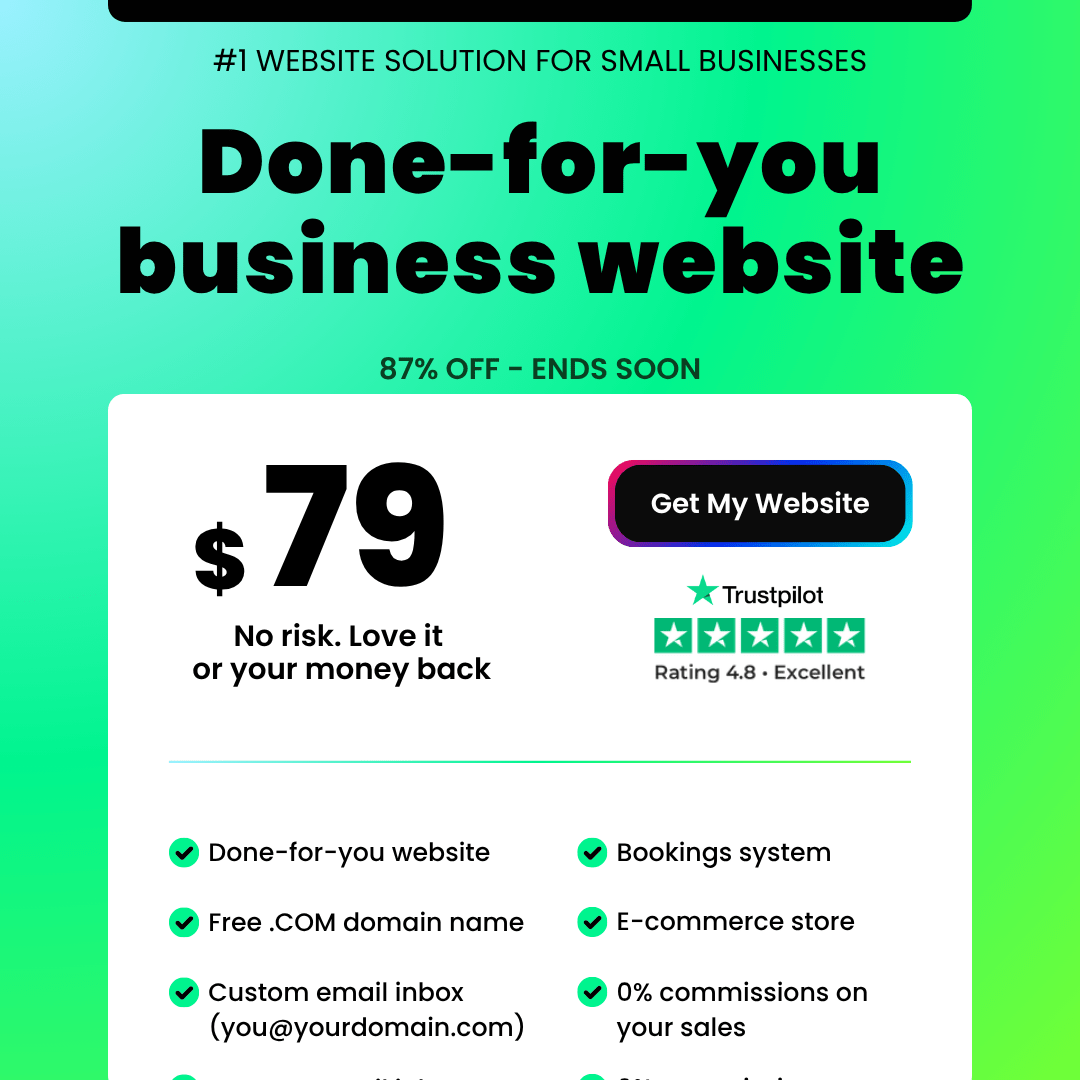
- 📊 US$ 124,99/mês (cerca de US$ 104/mês anualmente) + o Configuração de US$ 79 – tudo em comércio eletrônico mais uma equipe de marketing.
- 🧑💼 Adiciona um equipe dedicada de crescimento VIP, plano de marketing personalizado, reuniões individuais mensais e 2.000 palavras de conteúdo/mês.
- 🎯 Vale a pena negócios estabelecidos que de outra forma pagaria uma taxa de agência.
- 💡 Se você está apenas ficando on-line, comece Lançamento ou Plus e crescer nisso.
O que está incluído 📦
O plano de crescimento oferece tudo, desde comércio eletrônico até a camada de marketing:
- 🧑💼 A equipe dedicada de crescimento VIP
- 🗺️ A plano de marketing personalizado para o seu negócio
- 📞 Sessões individuais mensais
- 📣 Marketing multicanal - e-mail, redes sociais, anúncios, SEO, reputação
- ✍️ 2.000 palavras de conteúdo novo escrito para você todo mês
Portanto, não é apenas um site – é um site mais um departamento de marketing terceirizado. Meu guia de preços mostra como ele fica acima das outras camadas.
A matemática do ROI 🧮
Um retentor de agência de marketing normalmente funciona $ 1.000– $ 5.000 +/mês. Um profissional de marketing freelance de meio período geralmente custa entre US$ 500 e US$ 2.000/mês. O plano Growth reúne uma equipe de crescimento, um plano, ligações mensais, marketing multicanal e conteúdo para $ 124,99 / mês.
A questão não é "US$ 125 é muito?" É "quanto isso me custaria em outro lugar?" Aqui está a comparação 👇
💡 Um departamento de marketing pelo preço de alguns cafés por dia
O mecanismo de conteúdo ✍️
O 2.000 palavras de conteúdo novo por mês merecem destaque. Conteúdo novo e relevante é um fator de classificação genuíno ao longo do tempo – dá ao Google mais páginas para classificar e mais motivos para vê-lo como ativo e confiável.
A maioria das pequenas empresas nunca publica nada, porque escrever é uma tarefa árdua e leva um tempo que eles não têm. Ter isso tratado mensalmente é uma vantagem silenciosa e crescente. Meu Análise de SEO da UENI explica por que o conteúdo é importante para as classificações. 📈
Para quem é o Crescimento? 🎯
Vale a pena se você for:
- 🏪 Um negócio estabelecido com receita estável e espaço para crescer.
- 📣 Alguém que quer marketing totalmente terceirizado - sem anúncios de aprendizagem, SEO ou conteúdo próprio.
- 💰 Atualmente considerando (ou pagando) um retentor de agência — O crescimento é muito mais barato.
Ainda não se você:
- 🌱 Basta colocar seu primeiro site online - comece Lançamento (US$ 24,99) ou Mais ($59).
- 💷 Com um orçamento apertado onde cada dólar conta – acerte primeiro o básico.
Meu Guia Launch vs Plus cobre os planos de entrada, e meu análise completa cobre toda a escada.
O teste de prontidão: o seu negócio está realmente nesta fase? 🪜
Because Growth is the top of the ladder, the most important question is not whether the plan is good but whether your business is genuinely at the stage where it pays off, and there is a practical readiness test that answers this more reliably than ambition does. Ask three questions. First, is your foundation already working — a live professional site, a completed Google profile, reviews accumulating — such that added visibility would land on something that converts? Marketing poured onto a broken or absent foundation is wasted, which is why a business without those basics should start at Launch or Plus and climb later. Second, can your operation absorb more customers right now — do you have the capacity, the stock, the staff, the hours — such that additional enquiries become revenue rather than stress and declined work?
A tradesperson booked solid for two months gains little from more leads until capacity grows; a restaurant with empty midweek tables gains immediately. Third, do you have the revenue stability to fund a quarter of the plan without anxiety, since marketing compounds over months and judging it on week two guarantees disappointment? Answer yes to all three and Growth is aimed at exactly you — an established business with headroom, a working foundation, and the patience to let consistency compound. Answer no to any, and the honest advice is to fix that gap first with the cheaper tiers, because the plan amplifies what exists rather than conjuring what does not. This self-test takes five minutes and prevents the most common Growth-plan mistake, which is buying amplification before there is anything ready to amplify.
Para que serve realmente o individual mensal 📞
The monthly one-on-one session bundled into Growth reads like a minor perk on the feature list, but used properly it becomes the plan's steering wheel, and owners who understand this extract disproportionate value from it. Marketing for a small business is not a fire-and-forget missile; it is a sequence of experiments — which offers to push, which services to feature, which channels earn attention in your particular trade and town — and experiments need reviewing against results. The monthly call is where that review happens: what ran last month, what the numbers show, which enquiries arrived and from where, and what next month's emphasis should be, adjusted to the season, your capacity, and what the data revealed. For the owner, preparing ten minutes of ground truth for that call — how busy you actually were, which jobs you want more of, what customers mentioned — turns generic marketing into targeted marketing, because the team can only steer toward goals you articulate.
Owners who skip or sleepwalk through the calls get competent generic output; owners who engage get a marketing operation that progressively tunes itself to their business, which is the difference between renting a service and directing one. Since the call costs nothing extra, engagement is pure return: it is the mechanism by which two thousand words of content become the certo duas mil palavras, e nas quais o esforço publicitário e social se concentra onde suas margens realmente residem. Trate-a como uma reunião do conselho para o seu crescimento, e não como uma atualização de status duradoura, e o teto do plano aumentará de acordo.
As capturas honestas ⚠️
- 💵 US$ 124,99/mês é um compromisso real — certifique-se de que sua empresa possa converter a visibilidade extra em receita.
- ⏳Marketing é um composição jogo – espere resultados ao longo de meses, não dias.
- 🧩 É um gerenciado serviço, então você troca algum controle por conveniência.
- 🌱 Se você ainda não tem site, este é exagero - cresça nisso.
Meu Guia de reclamações e prós é honesto sobre quem deve esperar.
Um quarto sobre crescimento, retratado de forma realista 🗓️
To make the abstract concrete, walk through what a first quarter on the Growth plan typically looks like for a ready business, because the arc explains both the early quiet and the later payoff that owners should expect. In month one, the machinery assembles: the kickoff establishes your goals and voice, the custom marketing plan takes shape around your services and season, the first content pieces publish, and your social channels wake from dormancy to a steady pulse — while measurable results remain modest, because compounding starts slowly and this month is about building position, not harvesting it. Month two is where the surfaces multiply: several articles now index and begin catching their first searches, the consistent social presence starts registering with locals who see you repeatedly, early ad and promotion work drives its first measurable clicks, and the first "I found you online" enquiries trickle in — enough to confirm direction on the monthly call and steer emphasis toward what pulled.
By month three, the elements reinforce one another: the content library is broad enough to catch a meaningful spread of searches, reputation work has nudged reviews upward, the retuned emphasis from two review calls has concentrated effort on your best-margin services, and the enquiry flow — now typically at or past the one-to-three-customer hurdle that pays for the plan — arrives with a steadiness that sporadic self-marketing never produced. None of this is dramatic in any single week, which is exactly the point: the plan replaces marketing-as-event with marketing-as-metabolism, and by the quarter's end the owner can judge it the only way marketing should be judged, against a ledger of enquiries that did not exist before. Businesses that give it that honest quarter rarely need persuading afterward; the pipeline argues for itself.
Como decidir 🧭
Faça três perguntas:
- 💰 Já estou gastando (ou prestes a gastar) com ajuda de marketing? → O crescimento provavelmente economiza dinheiro.
- 📈 Minha empresa consegue lidar com mais leads agora? → Se sim, a visibilidade do Growth compensa.
- 🌱 Meu site já está no ar? → Se não, comece primeiro no Launch/Plus.
Combine o plano com o seu estágio. O crescimento é uma ferramenta de expansão, não um kit inicial. 🎯
O que o marketing terceirizado realmente resolve 🧠
Para avaliar se o plano de Crescimento merece o seu preço, comece por olhar honestamente para o problema que existe para resolver, porque esse problema é quase universal entre as pequenas empresas estabelecidas e raramente é mencionado claramente. Quase todos os proprietários que passaram da fase de sobrevivência sabem, de uma forma vaga e culpada, que "deveriam estar a fazer marketing" - publicando consistentemente, publicando alguns anúncios, publicando conteúdo, gerindo a sua reputação - e quase nenhum deles o faz, não por ignorância, mas por aritmética: o marketing feito correctamente é um verdadeiro trabalho a tempo parcial que requer horas todas as semanas, mais competências que levam anos a aperfeiçoar, e essas horas simplesmente não existem num horário já consumido pela entrega do produto ou serviço real. O resultado é o ciclo familiar de esforços esporádicos – uma explosão de postagens em janeiro, uma campanha publicitária abandonada na primavera, um blog com três artigos de dois anos atrás – que produz pouco e confirma a suspeita do proprietário de que o marketing “não funciona para empresas como a minha”, quando a verdade é que inconsistente marketing não funciona para nenhuma empresa. O que uma equipe de marketing terceirizada realmente vende, então, não é inteligência, mas consistência: os e-mails são enviados, o conteúdo é publicado, os canais permanecem ativos, o plano é executado mês após mês, independentemente de quão ocupada foi a semana do proprietário, porque é o trabalho real de alguém, e não a reflexão tardia e culpada de todos. Para o proprietário cujo crescimento estagnou no limite do boca-a-boca e cujo histórico de marketing é um cemitério de boas intenções, essa consistência é precisamente o ingrediente que falta, e vale a pena entender o plano como a compra desse ingrediente e não como qualquer produto individual.
As 2.000 palavras de conteúdo, devidamente valorizadas ✍️
Among the plan's components, the two thousand words of monthly content deserves a closer look than it usually gets, because content is the deliverable whose value compounds most and whose absence is most invisible. Fresh, relevant content serves two audiences at once: it gives search engines new pages to index and rank — steadily widening the net of searches your business can appear for — and it gives customers evidence of an active, knowledgeable operation worth trusting. Over a year, the plan's allocation amounts to twenty-four thousand words, roughly a dozen solid articles answering the questions your customers actually search: the how-much, the how-to, the which-option queries that precede almost every purchase in every trade.
Priced against alternatives, a competent freelance writer charges anywhere from a hundred to several hundred dollars per comparable article, so the content alone plausibly accounts for the majority of the Growth plan's fee before counting the strategy, the ads work, the social management, or the monthly consultations. But the deeper point is what consistent content does over time that sporadic content cannot: each published piece is a permanent asset that keeps attracting its slice of searches indefinitely, so a business that publishes monthly for two years owns a compounding library that a competitor starting today cannot quickly replicate. Most small businesses publish nothing, ever, because writing is slow and unfamiliar; a plan that quietly ships publish-ready words every month converts that universal weakness into a durable advantage, and for owners who evaluate it as "articles I would never have written otherwise," the math turns favorable quickly.
Lendo o ROI como um investidor 📊
The Growth plan's price triggers sticker hesitation in owners who compare it to the tiers below, but the correct comparison is to what growth-stage marketing costs through any other door, and that comparison reframes the number entirely. A marketing agency retainer for a small business starts around a thousand dollars monthly and climbs steeply, for a service whose scope often resembles what Growth bundles; a competent freelance marketer runs five hundred to two thousand a month; hiring even a very junior in-house marketer costs several thousand monthly once wages and overheads are counted; and the do-it-yourself option costs the owner's evenings, which are both finite and better spent. Against that field, one hundred twenty-five dollars monthly is not a premium price but a floor-level entry into professionally executed marketing, achievable only because the provider runs the same systematized playbook across many businesses at once — the identical scale economics that make the website itself affordable. The investor's question is then simple: what does the plan need to produce to pay for itself?
For most established businesses, the answer is one to three additional customers a month, depending on ticket size — a modest hurdle for the combined effect of consistent content, active social presence, managed ads, and reputation work aimed at people already searching in your area. Owners should hold the plan to exactly that standard, watching enquiries over a quarter the way an investor watches a position, and the monthly one-on-one calls exist precisely to review that evidence together. Marketing spend that cannot be measured deserves skepticism; marketing spend measured against a two-customer hurdle deserves, for most established businesses, a serious look. My guia de preços define o nível no contexto da escada completa.
Crescimento versus contratação versus fazer você mesmo 🥊
The final comparison worth making explicit is the three real alternatives an established owner weighs against the plan, because each fails in a characteristic way that the bundled team is designed to avoid. Doing it yourself fails on consistency, as covered earlier — not because owners lack intelligence but because marketing is structurally the first casualty of a busy week, and a channel worked sporadically returns almost nothing, making the DIY option less "free" than "expensive in invisible ways." Hiring in-house fails on economics at this scale: even a junior marketer costs several thousand monthly all-in, needs management you must provide, and represents a fixed commitment that a seasonal or variable business cannot comfortably carry — a sensible move at twenty employees, rarely at three. Engaging an agency fails on fit and floor price: retainers start where Growth's price ends and climb quickly, minimum engagements favor bigger clients, and a small local business often receives the junior team's leftover attention while paying senior-brochure rates.
The bundled model threads these failures deliberately — systematized enough to hit a small-business price point, professional enough to beat the owner's stolen evenings, scaled enough that your account is normal rather than negligible — and its integration with the website and profile you already run there removes the coordination tax of introducing an outside agency to somebody else's build. None of this makes it the right answer for every business forever; a company that outgrows it will graduate to dedicated hires or a boutique agency with genuine needs those options serve. But as the first serious marketing commitment for an established small business, it occupies a slot the alternatives simply do not: professional, consistent, measured, and priced inside the reach of the businesses that need it most. My guia de alternativas mapeia o panorama mais amplo de escolhas.
Perguntas frequentes ❓
O que inclui o plano de crescimento da UENI?
Tudo em comércio eletrônico, além de uma equipe de crescimento dedicada, plano de marketing personalizado, reuniões individuais mensais, marketing multicanal e 2.000 palavras de conteúdo mensalmente. 📊
Quanto custa o crescimento da UENI?
US$ 124,99/mês (cerca de US$ 104 anuais) mais a configuração de US$ 79. 💵
Vale a pena?
Para empresas estabelecidas que de outra forma pagariam uma agência, sim – é muito mais barato. Para sites totalmente novos, comece com tamanhos menores. ⚖️
Posso atualizar para o Growth mais tarde?
Sim – comece com um plano inferior e avance quando estiver pronto para escalar o marketing. ⬆️
Isso realmente inclui conteúdo?
Sim – 2.000 palavras de conteúdo novo escrito para você todos os meses. ✍️
O veredicto ⚖️
O plano de crescimento da UENI é essencialmente um departamento de marketing terceirizado integrado ao seu site - uma equipe de crescimento, um plano, ligações mensais, marketing multicanal e conteúdo, por uma fração do valor da agência. 🏆
Minha avaliação: 4 / 5 para seu usuário-alvo – o negócio estabelecido e pronto para escalar. Se você está apenas online, é um exagero; comece no Launch ou Plus e cresça. Mas para os proprietários que desejam que o marketing seja totalmente administrado, o valor versus uma agência é genuinamente forte. 🚀
A maneira limpa de fechar é com a pergunta que realmente decide esse nível: não "são cento e vinte e cinco dólares por mês muito", mas "quanto está me custando atualmente o meu crescimento por não acontecer". Uma empresa estabelecida com uma base funcional, capacidade ociosa e nenhum marketing consistente está deixando um fluxo mensurável de clientes não reclamados todos os meses – clientes que pesquisam, comparam e escolhem quem apareceu com conteúdo, presença e avaliações. O plano de Crescimento existe para reivindicar esse fluxo a um preço que só a sistematização torna possível, e pede em troca apenas o que qualquer marketing exige honestamente: um quarto de paciência, dez minutos de envolvimento por mês numa chamada e a vontade de medir resultados como um investidor em vez de um jogador de lotaria. Se o seu teste de prontidão deu positivo em todas as três questões, esse é um acordo justo dirigido diretamente a você, e o próximo passo sensato é simplesmente pegar o plano para o seu trimestre medido e deixar seu próprio livro de investigação real - não esta revisão, não qualquer revisão - dar o veredicto final e único que realmente importa para o seu negócio específico.
📊 Site + equipe de marketing — valor da agência, preço baixo
US$ 124,99/mês + configuração de US$ 79 · Garantia de devolução do dinheiro em 30 dias 🛡️
Os preços estavam corretos no momento da publicação e podem sofrer alterações — sempre confirme no site. página oficial de preços da UENIContém links de afiliados; informações gerais, não constituindo aconselhamento. ✍️

- How Fast Do Email Lists Actually Grow? - Outubro 12, 2026
- YouTube Tag Generators: A Tool for a Job That Barely Exists - Outubro 12, 2026
- Open Rate Benchmarks After Privacy Changes - 9 de outubro de 2026